
Google Playground Lets You Create Games With AI Without Coding
Creating a video game usually requires programming skills, game engines, 3D design, animation, and a lot of time. Google is now trying to make that process much easier with a new AI-powered platform called Google Playground.
The new platform allows people to create browser-based games by simply describing what they want. Instead of writing code, users can use natural language prompts to build and customize their game ideas.
This could make game creation much more accessible to beginners, students, content creators, and anyone who has a game idea but does not know how to code.
What Is Google Playground?
Google Playground is an experimental gaming platform from Google that focuses on AI-powered game creation.
The basic idea is very simple. You describe the game you want to create, and the AI helps turn that idea into a playable experience.
Users can start with a blank idea, use a starter prompt, or modify an existing concept. The platform is designed to make the creation process feel more like having a conversation than traditional game development.
You can explain what you want to change, and Playground can help adjust the game.
Create Games Using Text Prompts
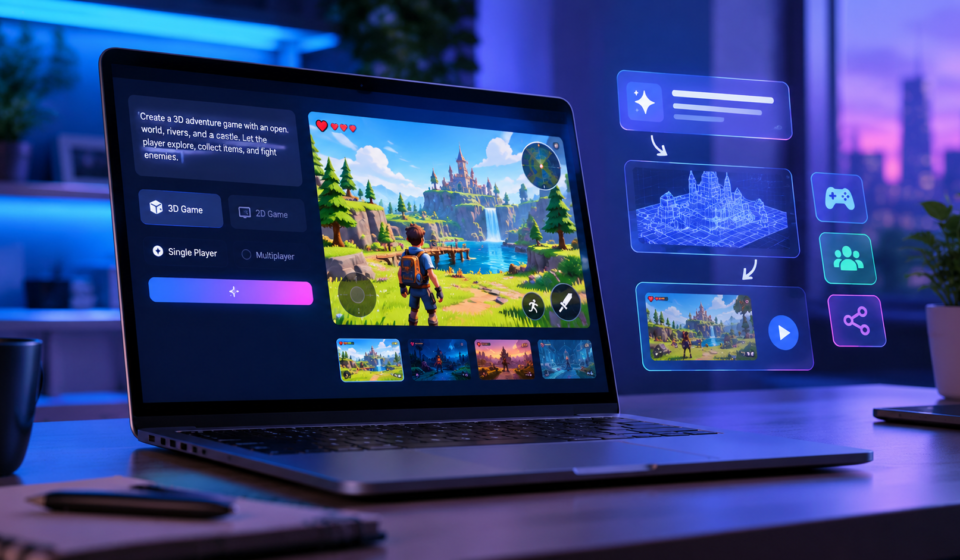
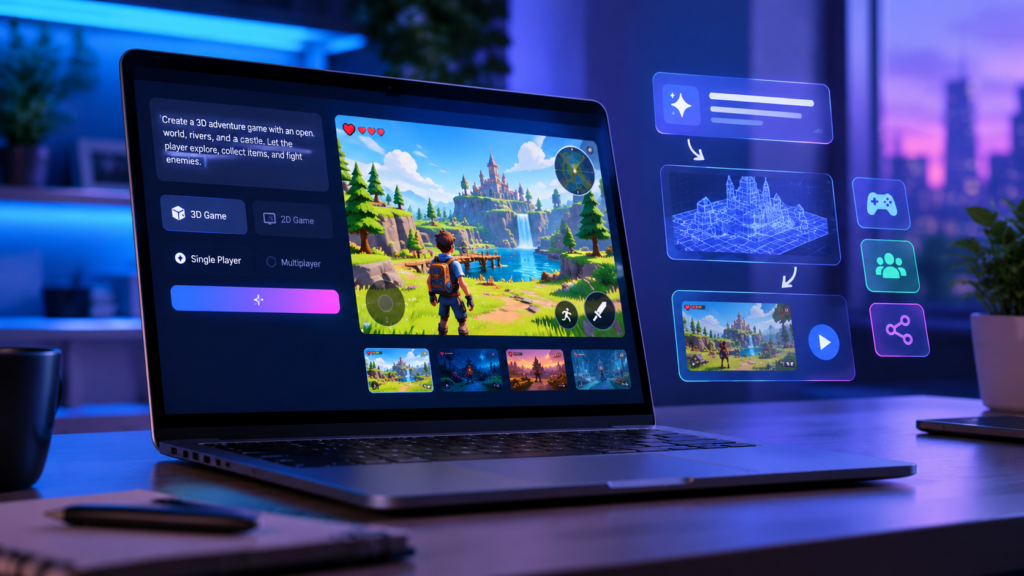
One of the biggest features of Google Playground is its prompt-based interface.
You can describe things such as the type of game, environment, characters, rules, and gameplay mechanics using normal language.
For example, you could enter a prompt like:
“Create a 3D adventure game where a player explores a large forest, crosses a river, collects items, and reaches a castle.”
Instead of starting from a traditional game engine, you can use your idea as the starting point.
You can then continue giving instructions to improve or change the game.
You Can Build 2D and 3D Games
Google Playground supports both 2D and 3D game experiences.
This gives creators more flexibility when deciding what type of game they want to build.
You can also create experiences designed for single-player or multiplayer gameplay, depending on the supported game type.
Because the games run in a browser, they can be played on devices such as phones and laptops without requiring users to install a traditional game engine.
Change Your Game With More Prompts
Creating the first version of a game is only the beginning.
Google Playground is designed to let users continue working on their games through additional instructions.
For example, you could ask the AI to change the environment, modify the physics, customize characters, or change the rules of the game.
This means you do not necessarily have to start again every time you want to make a change.
The conversational approach could be especially useful for people who are new to game development.
Google Uses Multiple AI Models
Google Playground combines several of Google’s AI technologies to power the game creation experience.
The platform uses models such as Gemini, Nano Banana, and Lyria, along with Google’s own systems designed specifically for interactive game creation.
The goal is to combine AI understanding with game-building tools so users can move from a simple idea toward an interactive experience.
Games Can Be Played and Shared
Google Playground is not only focused on creating games.
Once a game is ready, creators can play it directly in the browser and share it with other people.
Games can also be published to the Playground Explore gallery, where other users can discover and play them.
This turns Playground into more than just an AI creation tool. It also gives creators a place where they can share their experiments and discover games made by other people.
Multiplayer and Leaderboards
Google is also adding community-focused features to Playground.
Some supported games can include multiplayer experiences and leaderboards.
Players can rate games and interact with the gaming community, giving creators a way to see how other people respond to their projects.
These features could make the platform more interesting because users will not only be creating games but also playing and discovering games made by others.
Google Playground Is Starting in the US
Google Playground is initially being rolled out in the United States.
The platform is available as an experimental experience, and access can depend on eligibility and usage limits.
Free users can create games, while Google One members can receive expanded access depending on their membership.
Availability may expand to additional regions in the future.
Google Is Also Working With Unity
Google is not stopping with simple AI game creation.
The company has also announced a partnership with Unity around a new experience called Unity Spark.
The goal is to provide more advanced game development capabilities while still using AI and natural language prompts.
Unity Spark is expected to provide more powerful mechanics, higher-quality 3D capabilities, and access to the Unity runtime.
This could create a path where someone starts with a simple AI-generated game and eventually moves toward a much more advanced interactive project.
What Does Google Playground Mean for Game Development?
AI is changing how people create digital content, and game development could be one of the biggest areas affected.
Traditional game development can take months or even years and normally requires people with different technical and creative skills.
AI tools like Google Playground could lower the barrier for beginners.
Someone with no programming experience can now experiment with a game idea without first spending months learning a programming language or a complex game engine.
However, this does not mean AI can completely replace professional game developers.
Creating a polished game still requires good design, testing, performance optimization, creative direction, and a strong understanding of what makes a game enjoyable.
AI can make the starting process easier, but human creativity and decision-making remain important.
Why Google Playground Is Interesting
The most interesting part of Google Playground is how simple the process can become.
Instead of thinking about programming languages, game engines, scripts, and technical systems first, users can start with an idea.
They can describe what they want, test the result, and then continue improving it.
This approach could be useful for:
Beginners learning about game development
Students experimenting with interactive projects
Developers testing game ideas
Content creators making simple games
Designers creating prototypes
People who simply want to turn an idea into something playable
Final Thoughts
Google Playground is an interesting step toward making game development more accessible through AI.
The platform allows users to create browser-based games using natural language prompts, customize their ideas, play their creations, and share them with others.
The upcoming connection with Unity could make the platform even more powerful by giving creators access to more advanced 3D and game-development capabilities.
For now, Google Playground is still an experimental platform, but it shows how AI could change the way people build and experience games.
Instead of learning how to code before creating a game, the future could allow more people to start with an idea and build from there.